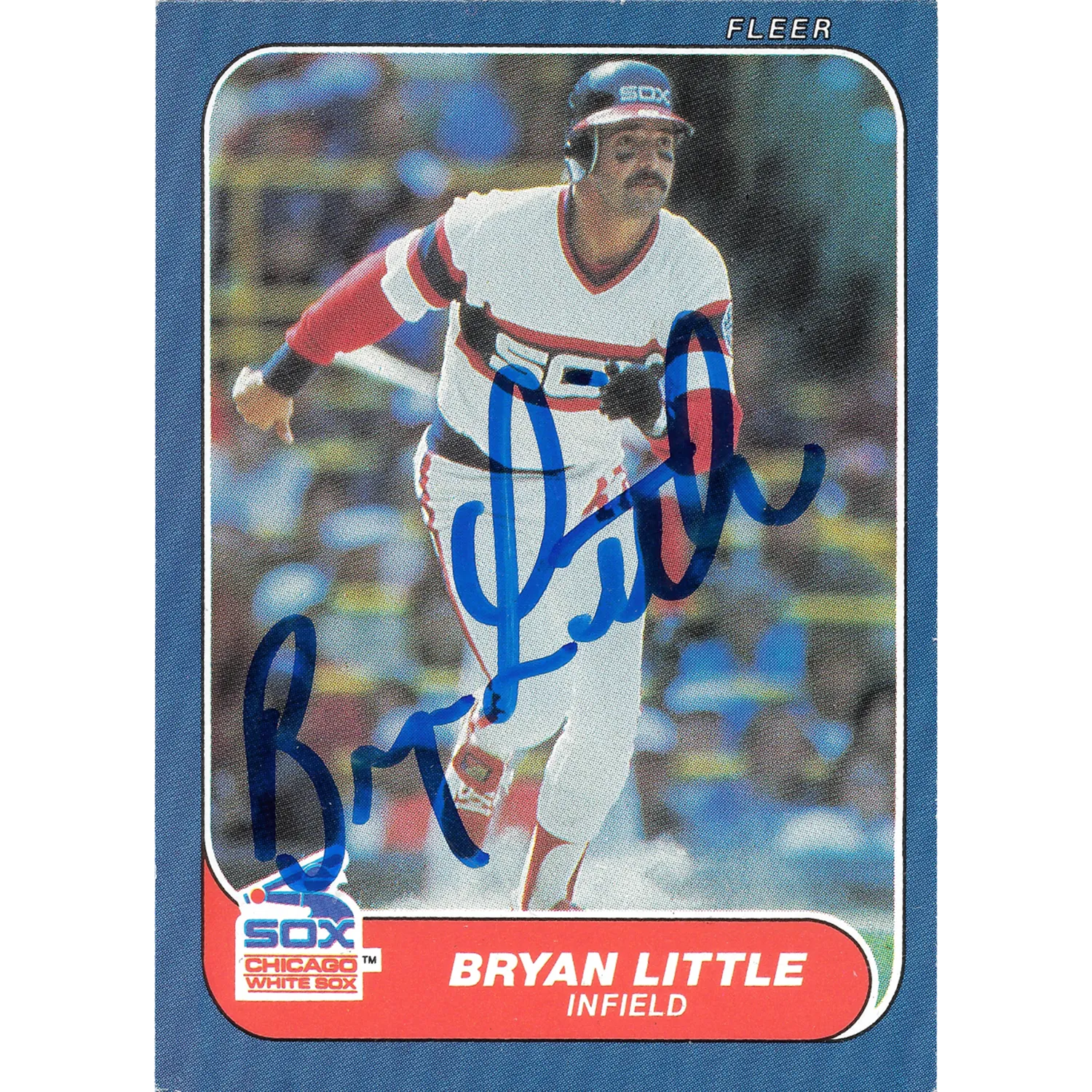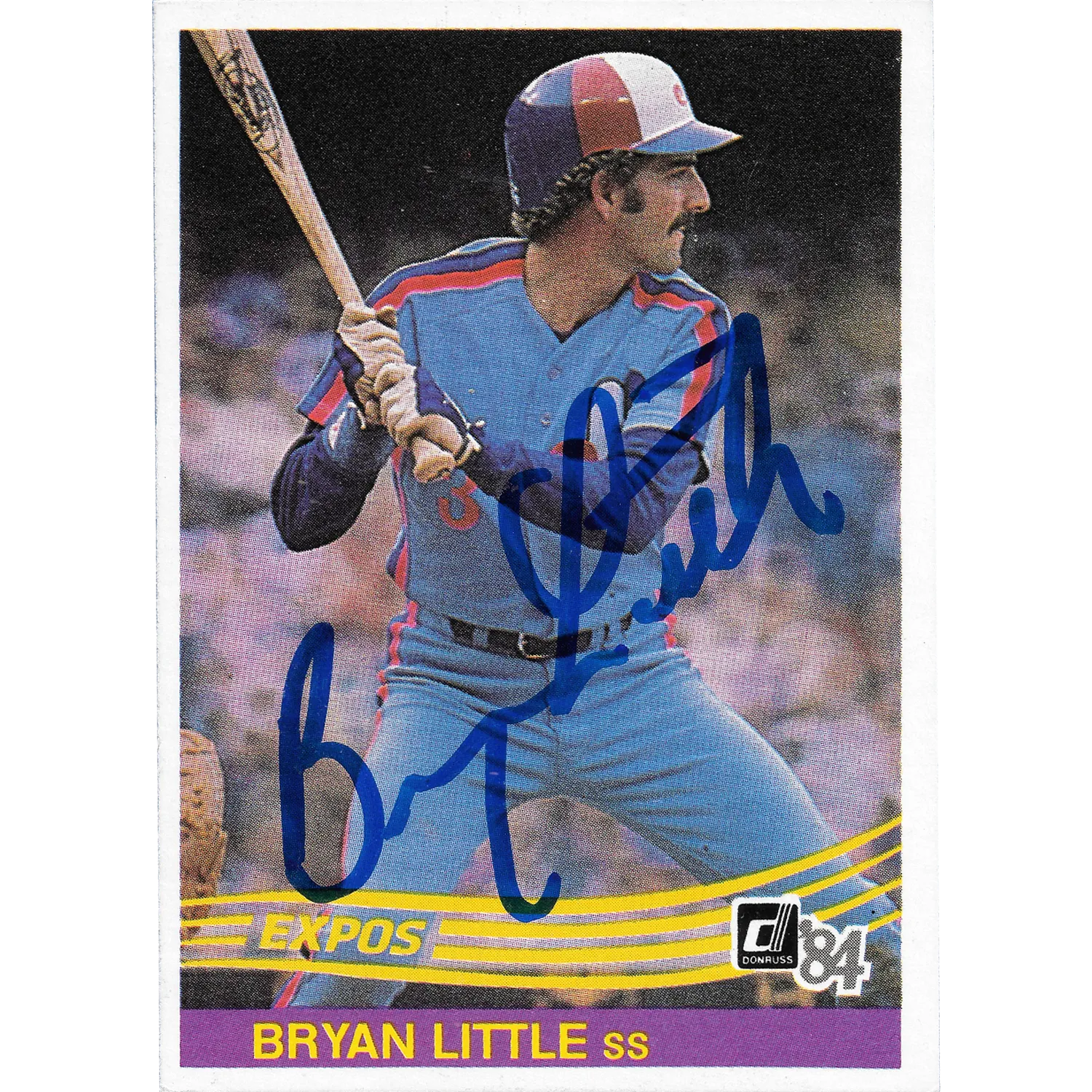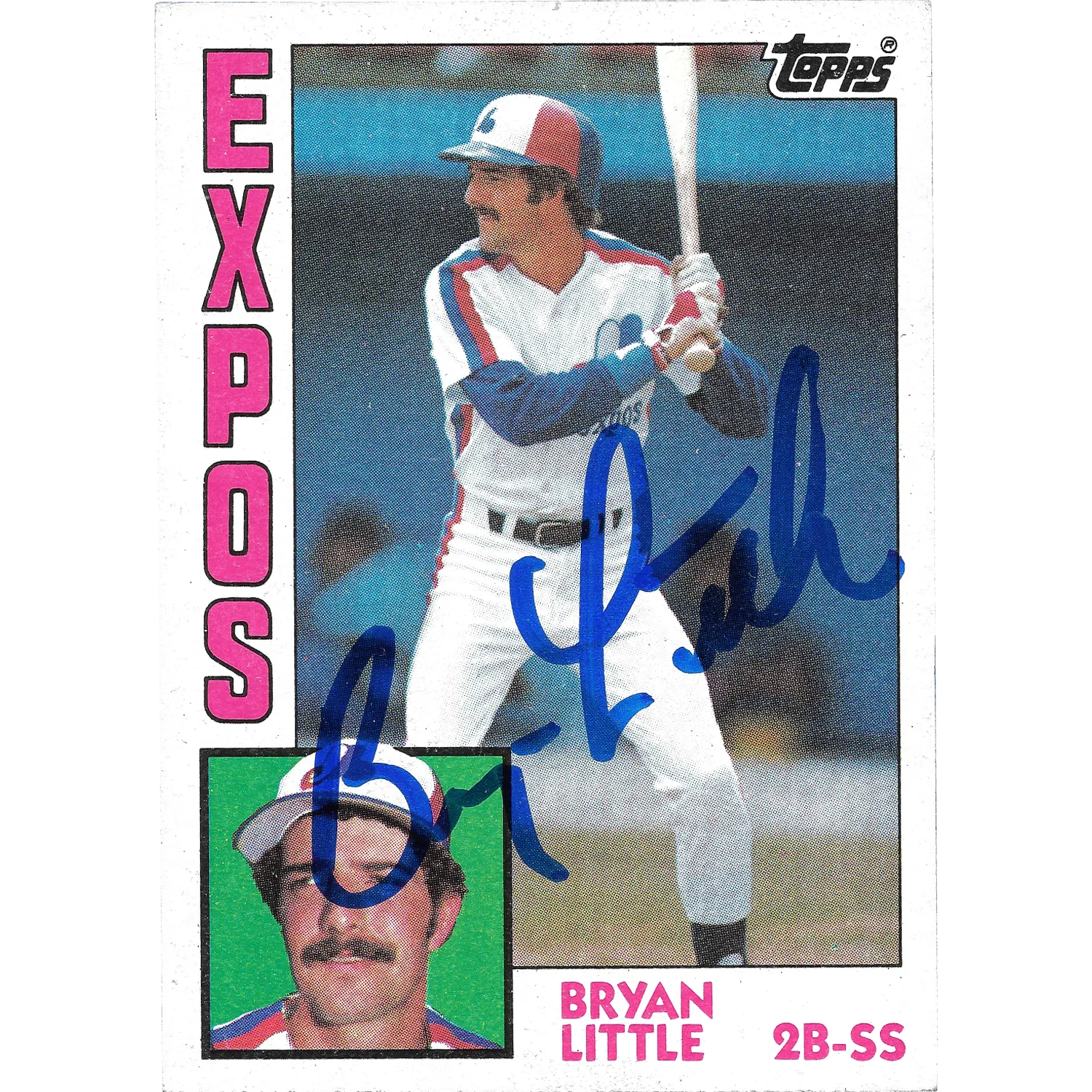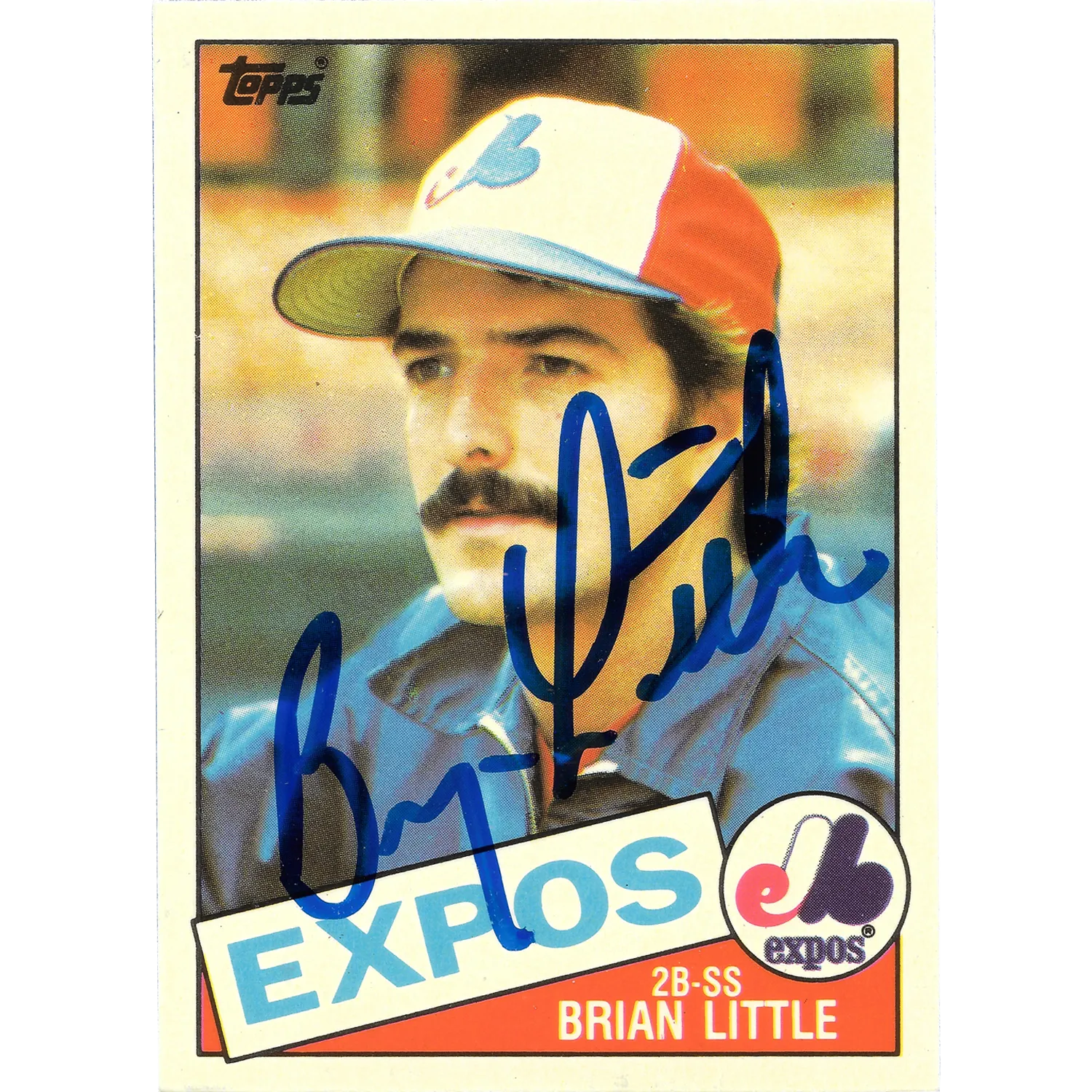
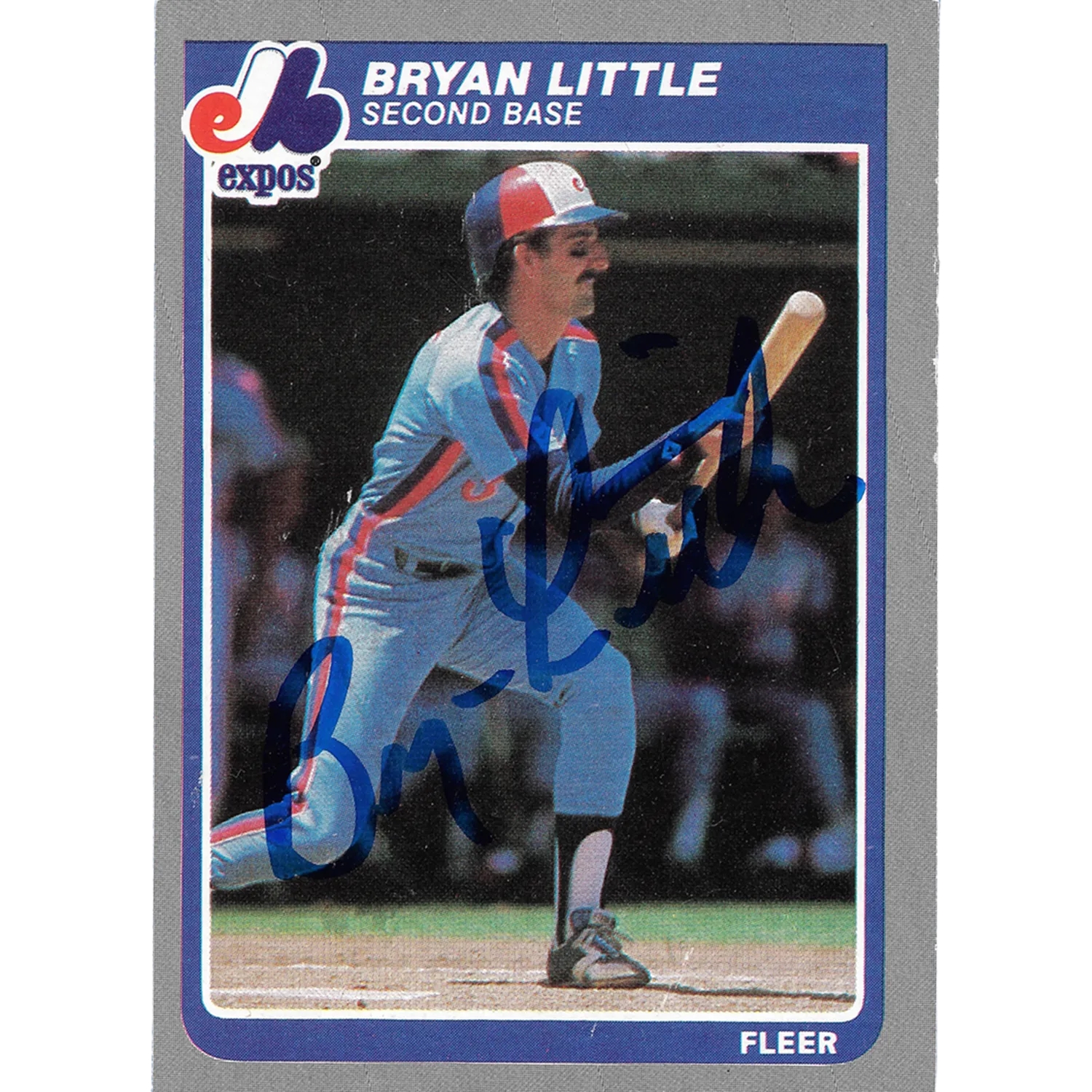
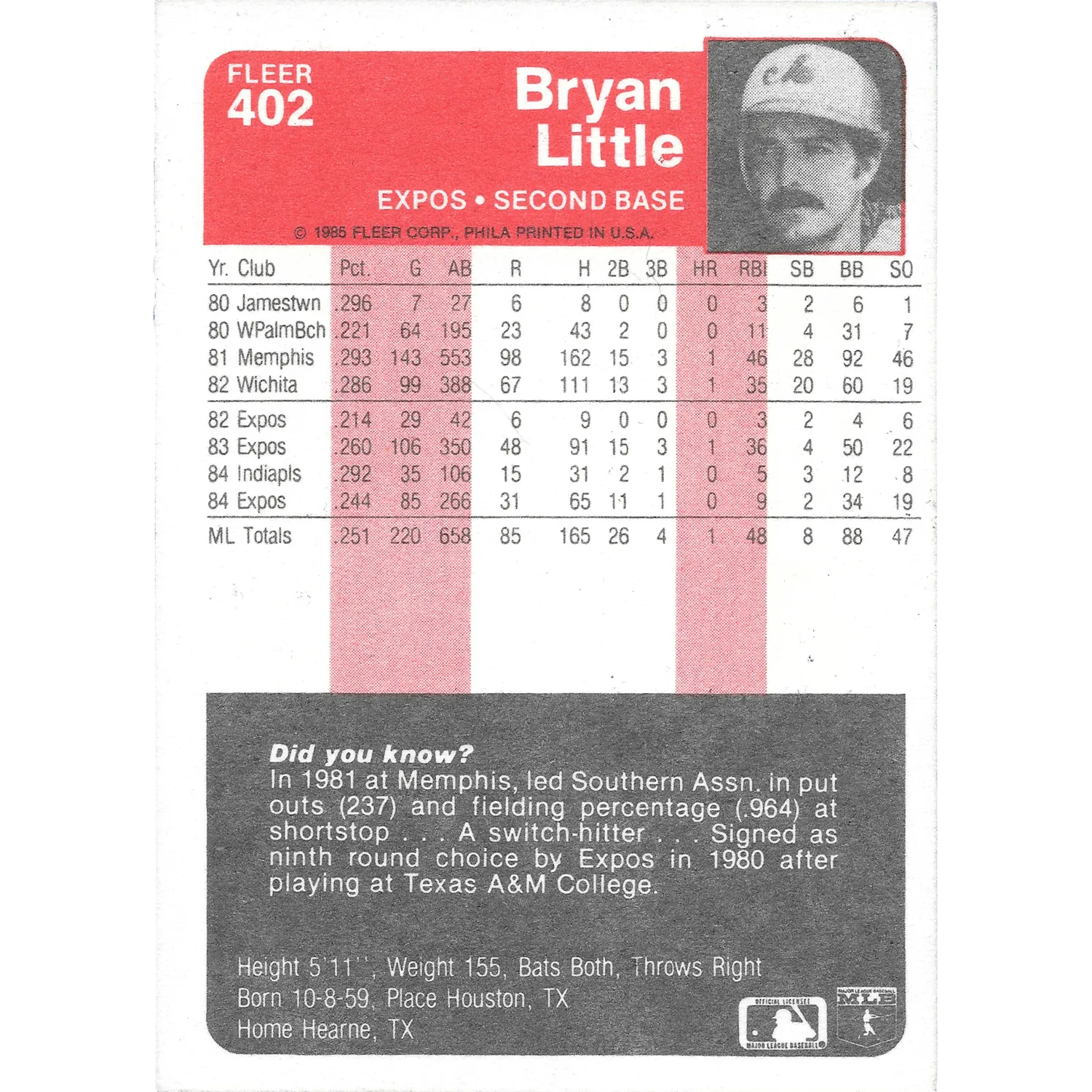
1985 Fleer Bryan Little #402 Autographed
Card · Baseball
Autographed
- Set
- 1985 Fleer
- Number
- #402 of 660
- Condition
- Poor
Last updated May 5, 2025
Highlights
Signed by Bryan Little
Description
This card is #402 of 660 in the 1985 Fleer set. It features Bryan Little of the Montreal Expos. It is in poor condition.
Hard signed by Bryan Little through the mail, in blue marker.
The 1985 Fleer baseball card set, a staple of the "junk wax" era, is remembered primarily for its impressive rookie class and its contribution to the baseball card boom of the 1980s. Comprising 660 cards, the set features a clean, straightforward design: a white border frames each card, with the player's name and position printed in a simple font at the bottom, and the Fleer logo discreetly placed in a corner. While the design itself is unremarkable, it serves as a backdrop for the key feature of this set: its rookie cards. The set boasts the rookie cards of Hall of Famers Roger Clemens and Kirby Puckett, as well as the highly anticipated rookie of pitching sensation Dwight Gooden, whose meteoric rise captivated baseball fans. This trio alone makes the set highly desirable among collectors. Further enhancing its rookie class are players like Bret Saberhagen, Orel Hershiser, and Eric Davis, all of whom went on to have successful careers. Each pack of 1985 Fleer also included a team logo sticker, a popular addition that provided an extra element of collectibility for younger fans. The set was distributed in various pack types, including wax packs (the most common), cello packs (which contained more cards), and rack packs (larger packs displayed on store shelves). While the sheer volume of cards produced during this era has limited the individual value of many cards, the 1985 Fleer set remains a sought-after product due to its iconic rookies and its representation of a key period in baseball card history. The set is also notable for its contribution to the increasing popularity of card collecting, which would reach its peak in the late 1980s and early 1990s.
Sources: tcdb.com, baseball-reference.com